
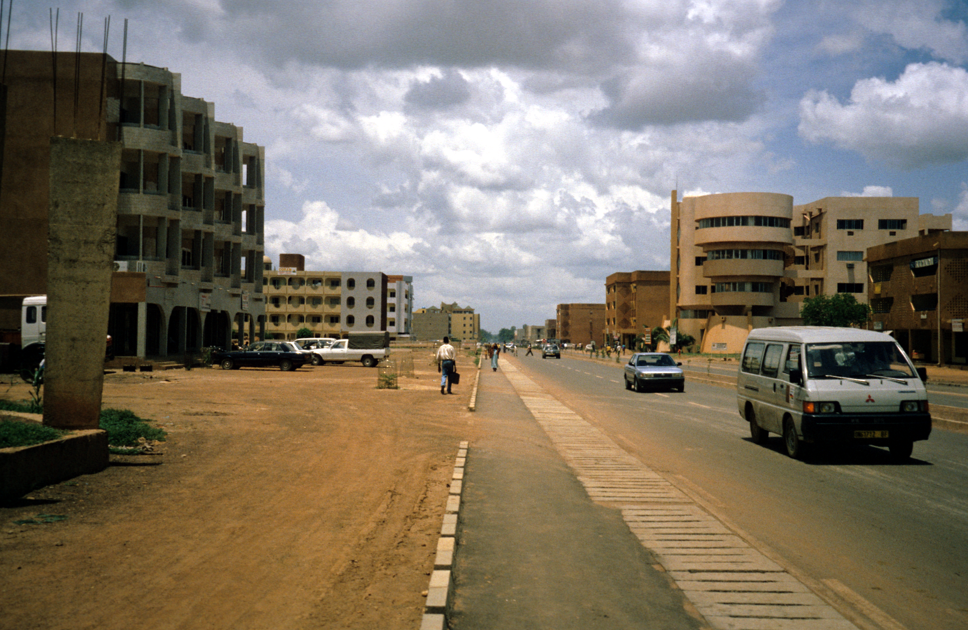
Control over infrastructure has become a key factor in armed conflicts. In the West African Sahel as in the Persian Gulf, political power depends on the ability to control flows rather than territories. The Strait of Hormuz’s strategic significance, like that of the Sahelian road network, accumulated through decades of global energy infrastructure. Today, those who can control the geography can collect the rent.
By Steven M. Radil and Olivier Walther, 6/1/2026.
Power through networks
In the first days of the Israel-US war on Iran, Iran’s Revolutionary Guards struck a handful of commercial vessels in the Strait of Hormuz with drones and missiles, broadcast warnings to others, and waited. Within hours, oil tanker traffic through the strait had fallen by approximately 80 percent. Within days, hundreds of ships sat anchored outside the waterway rather than risk the passage. Although Iran’s material threat to tankers remained, the strait became as much financially unnavigable as it was physically dangerous.

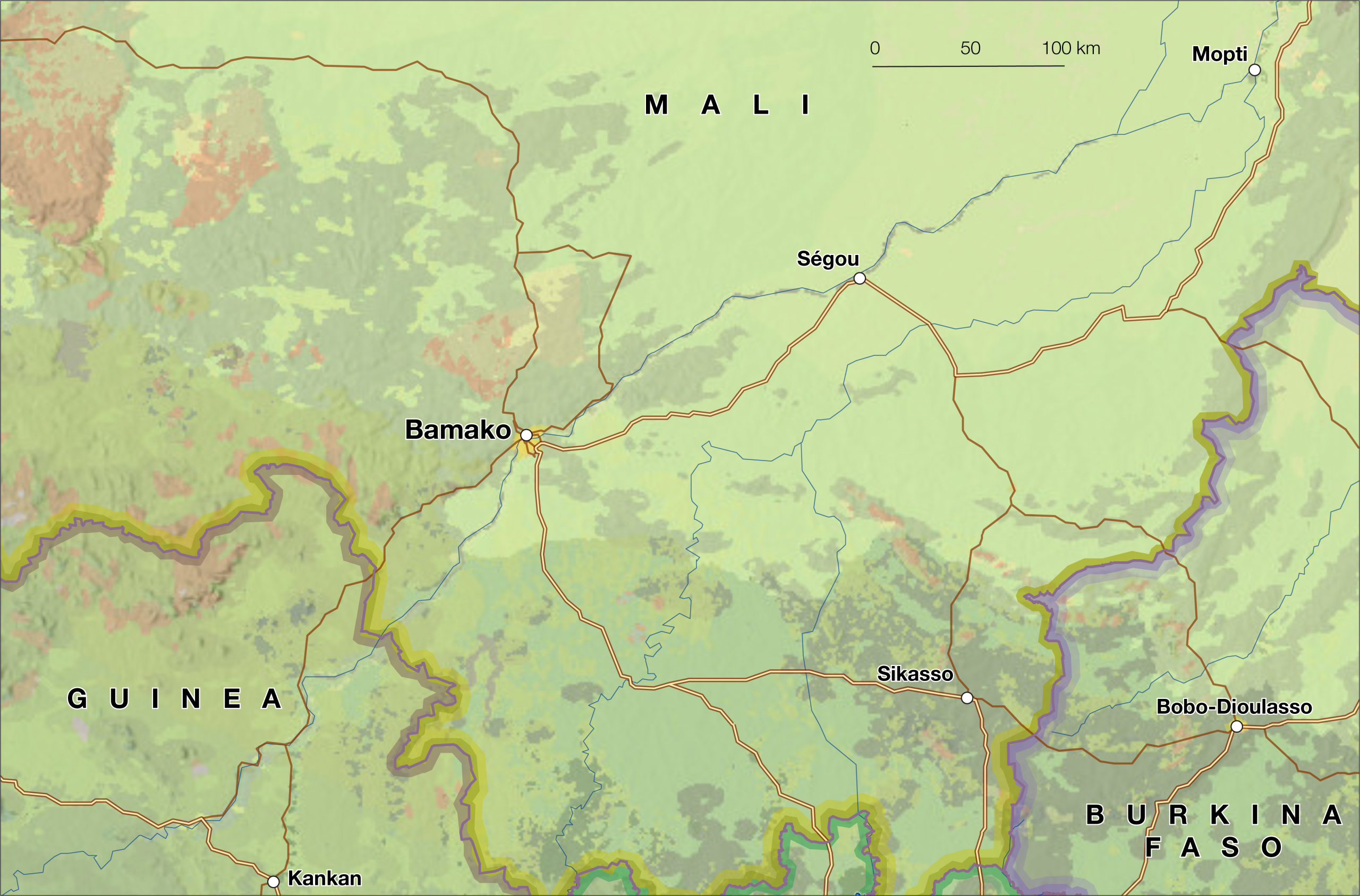
That same week, in Bamako, the capital of landlocked Mali, fuel began flowing again after a seven-month crisis that had paralyzed the city. The resolution was not because of a military victory. Mali’s junta had released more than 100 suspected jihadists in exchange for an agreement with JNIM, the al-Qaeda-affiliated Group for the Support of Islam and Muslims, to allow gasoline and diesel tanker convoys to pass JNIM’s checkpoints that had isolated the city.
Two crises about energy, separated by four thousand miles of desert and ocean, had involved the same kind of pressures, and they were already beginning to interact. Even as the routes to Bamako reopened, the global oil price spike driven by the Hormuz closure was making fuel dramatically more expensive to import. The roads were open but the network was making what moved through it costlier.
What connects these events is geography understood as an instrument of political power, though not all geographic instruments originate the same way. The Strait of Hormuz is a geological accident that no state designed or constructed. The roads into Bamako are the results of human decision-making, built and improved over more than a century of colonial administration and post-independence investment.
These may seem like categorically different sources of geographic power, but the leverage that accrues to whoever controls either feature derives from the same underlying condition: the concentration of networked flows that has accumulated around the geographic feature itself over time, and the cost of rerouting those flows within any realistic political crisis.
The question in each case is not necessarily how the geography came to be but how long it would take to modify or build around it, and whether any actor in a given confrontation has that time.
Sahelian blockades
In the Sahel, the answer is essentially never, and the reason is embedded in the road network’s colonial origins. Sahelian infrastructure was not designed to create resilient horizontal connectivity between towns and regions. It was engineered radially, connecting coastal ports to interior resource extraction zones to serve the colonial economy rather than the populations it crossed.
Postcolonial states built a few “national unity” roads to connect capital cities to provincial centers but these projects hardly changed the overall architecture of the transport network. That topology left landlocked states dependent on a handful of long, thin corridors to the sea, with little redundancy.
Research across more than 58,000 violent events in the region has documented that nearly two-thirds of all attacks occur within a kilometer of its road, a concentration reflecting the structural reality of a network so sparse that controlling a few key arteries means controlling movement across vast territories.

When JNIM began targeting fuel tanker convoys arriving from Senegal and Côte d’Ivoire in September 2025, destroying more than 130 vehicles on four separate routes as verified by satellite imagery, it was exploiting a vulnerability designed into the region over a century before the group existed.
The blockade of Bamako extended that logic to its conclusion. By October 2025, fuel prices had risen by more than 400 percent, schools closed, power outages became routine, and foreign embassies urged their citizens to leave. The junta that had expelled French and American counter-terrorism forces in the name of sovereign self-determination found itself unable to supply its own capital with the most basic modern commodity.
Ultimately, it traded its right to detention and punishment, a foundational attribute of state sovereignty, for the right to move fuel trucks unmolested along its own roads for a few months. The truce holds only until Eid al-Adha at the end of May, meaning JNIM has established not just a precedent but a recurring revenue model, with the next negotiation already scheduled.
Who controls Hormuz can collect the rent
The Hormuz crisis reveals a similar logic operating at the scale of great power conflict, deployed by a state rather than a non-state group against the global energy system rather than a single capital.
Iran’s position differs from JNIM’s in degree and geography rather than underlying principle. Where JNIM extracts concessions from a weak state by controlling a few key road intersections, Iran sits astride one of the few maritime passages through which approximately twenty percent of the world’s oil and gas must flow. The strait’s strategic significance, like that of the Sahelian road network, was not constructed by Iran but accumulated through decades of global energy infrastructure. Today, the actor that can control the geography can collect the rent.
The instrument Iran deployed was, like JNIM’s, not exclusively military but a manipulation of risk perception in the commercial and financial networks that govern global shipping. Both Iran and JNIM recognize that controlling a corridor requires making the cost of its use uncertain enough that the mechanisms of commerce withdraw their cooperation, allowing geography to complete the work.
In Mali, that mechanism was the trucking industry itself, the owners and drivers who stopped accepting assignments on the Bamako routes once attacks became systematic. Iran achieved the same effect through the insurance market, as war-risk underwriters withdrew coverage from Gulf-bound vessels in early March not under Iranian orders but in rational response to demonstrated threat.
The result was functionally equivalent to a blockade at a fraction of the military cost, achieved by a state that had just absorbed devastating strikes on its military infrastructure, its nuclear program, and its senior leadership.
The arrangement that has since emerged makes the underlying logic explicit. Iran has established what observers have taken to calling the Tehran Toll Booth: a corridor through Iranian territorial waters available in exchange for payments reportedly as high as two million dollars per ship, with access facilitated by geopolitical alignment, cargo type, and willingness to pay. Chinese-linked vessels broadcast their ownership over automatic identification systems to seek passage. Indian carriers negotiated directly with Tehran. Pakistani tankers transited while signaling approved affiliations.
The Iranian parliament has moved to formalize the arrangement with permanent taxes and fees, converting a wartime disruption into a permanent revenue architecture. What Iran has constructed operationally is a fee-for-service zone enforced by territorial control on one side and demonstrated willingness to punish unauthorized transits on the other.
Geography and the vulnerability of states
The kinship with JNIM’s checkpoint economy is geographic as well as functional.
In much of the Sahel, armed groups erect checkpoints to tax traders and monitor population movements. The Bamako fuel deal was the endpoint of that strategy as JNIM had accumulated enough leverage over the flows of an essential commodity to force the state into a formal negotiated concession. The Tehran Toll Booth operates on the same model, with the primary difference being the global significance of the flow being taxed rather than the nature of the operation itself.
The irony of the situation is that armed groups like JNIM are employing a strategy that has been used by Sahelian states themselves since their independence 65 years ago. From Dakar to N’Djamena, Sahelian roads are dotted with checkpoints set up by customs, gendarmerie, the police, and various other government agencies to illegally tax the flow of people and goods. Between Ouagadougou in Burkina Faso and Accra in Ghana, for example, livestock traders are stopped no less than 260 times over 1000 km. This predatory economy explains why West Africa is one of the most expensive regions in the world in which to do business.

Iran’s position is distinct because the strait is simultaneously a geographical feature and a network node, collapsing the distinction between a valuable asset and how it must move. Oil is always important to Iran’s economy, but its primary asset during the war is the passage itself. This is why Iran, militarily degraded and geopolitically isolated, extracted sanctions relief from the US in weeks through chokepoint pressure that years of diplomacy could not deliver.
Similarly, JNIM extracted prisoner releases through a few months of fuel blockade that years of military campaigning had not produced. In both cases, the actor controlled something its adversary could not bypass within the time available.
Mali’s double bind highlights the cross-scale effects of the war on Iran for many African states. The junta paid a substantial political price to reopen its fuel corridors, only to discover that the fuel those corridors now carry had become dramatically more expensive, because the maritime chokepoint helping to set the global price had been closed simultaneously.
The road problem and the sea problem are not separate crises but expressions of the same geographic reality operating at different scales, interacting in ways that compound the vulnerability of states lacking leverage at either level.
Challenges ahead
Recognizing this as a geographic phenomenon rather than a purely military, diplomatic, or financial one matters because it shapes what responses are available.
The United States and its partners have significant capacity to respond to Iranian statecraft through sanctions, diplomacy, and military force, but no capacity to alter the geographic reality that the strait exists, that Iran borders it, and that the global energy system has organized itself around transiting it for decades.
Similarly, Mali’s junta can negotiate truces without being able to change the fact that an infrastructure topology left its capital dependent on corridors a determined non-state group has learned to control. Geography sets the terms on which these political contests are fought, and in the current period those terms increasingly favor actors who control chokepoints over actors who merely possess territory.

The Strait of Hormuz became Iran’s most powerful strategic instrument because the global economy organized itself around it through decades of accumulated investment and routing decisions. The roads into Bamako became JNIM’s most effective weapon through a different but parallel process: a colonial topology designed for extraction left a landlocked state with no redundant supply routes, and the group learned to exploit the leverage that design inadvertently created. Neither actor built the geographic feature that defines its power but both understood, with considerable sophistication, how to make others pay for having no alternative path.
Every actor reassessing its leverage in the emerging order will be asking the same questions: what essential flows must pass through where I am and how vulnerable am I to interruptions of flows that I cannot affect? The answers to those questions, mapped onto the world’s chokepoints of road and sea, constitute the emerging geography of power in the period ahead.
Featured image by Bernard Zuppinger.